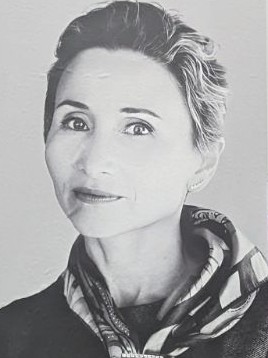
Healthcare Data & AI Platform Leader · Greater Philadelphia

Anfisa Cullins

I turn complex healthcare data into trusted platforms, products and AI.

For 20 years I've built the data foundations behind patient-level analytics and commercial pharma decisions, at IQVIA, HealthVerity and ConcertAI. I'm as comfortable in the executive conversation about strategy as in the architecture review with engineers, and I stay close to both.

Portrait of Anfisa Cullins
5+ PBU.S. patient-level data ecosystem re-platformed
6 wks → real timePatient cohort analysis, via patented data structures
6 → 2 wksData supplier onboarding, 60–70% automated
40%Lower data processing costs after Databricks modernization
~50Engineers and architects led across the U.S., Poland and India
01

Selected work

Three transformations, three chapters of the same story: first scale, then platform, then AI.

2005–2011 · SDI

Analytics

Hands-on SQL and methodology on patient-level prescription and medical data.

2011–2021 · IQVIA

Scale

From syndicated data products to a 5+ PB longitudinal patient platform.

2022–2024 · HealthVerity

Platform

From custom services to a reusable, governed data platform.

2025–2026 · ConcertAI

AI

AI-ready foundations and GenAI products for commercial users.

IQVIADirector, Technical Architecture2011–2021

Scaling longitudinal patient intelligence

Re-platformed IQVIA's U.S. patient-level data ecosystem and invented the longitudinal data structures that made complex cohort analysis interactive.

5+ PBPatient-level claims and Rx data re-platformed
6 wks → real timeComplex patient cohort analysis
U.S. patentLongitudinal medical data records
Read the case study
Challenge
More than five petabytes of U.S. longitudinal claims and prescription data lived on legacy platforms. Complex cohort studies took up to six weeks, and the organization didn't yet have the skills a big-data platform needed.
My role
Owned the architecture and built the engineering and data teams to deliver it, in the U.S., Warsaw and Bangalore.
What we built
A distributed, Hadoop-based platform for longitudinal patient data, with new data structures for non-conforming medical records that let analysts define cohorts interactively. We created an AI-ready layer so data scientists could work with patient-level data at full scale.
Outcome
Cohort analysis went from up to six weeks to near real time. The platform enabled some of IQVIA's first large-scale ML workflows and powered patient-level products across the U.S. life sciences business.

"It wasn't simply moving five petabytes to a new platform. We changed what the company could do with its data."
HealthVerityVP, Data Platform & Data Product Engineering2022–2024

From custom services to a reusable data platform

Led the move from project-based data services to a multi-tenant Databricks Lakehouse, and stayed hands-on with the architecture and implementation.

~100Healthcare data suppliers, datasets up to 200 TB
6 → 2 wksSupplier onboarding, 60–70% automated
~50%Lower infrastructure costs
Read the case study
Challenge
Client solutions were delivered as custom, project-based services. Every new supplier and client meant repeated manual work, high delivery costs and slow time to value.
My role
Led data platform and data product engineering. I designed the Lakehouse architecture and migration strategy and worked hands-on with SQL, Python and PySpark.
What we built
A centralized platform that standardized acquisition, identity resolution, quality, governance and delivery:
Common ingestion→Standardized healthcare data→Reusable processing→Shared data products→Scalable consumption

We used a medallion architecture with Unity Catalog governance, lineage, observability, CI/CD and infrastructure as code. Onboarding combined ML/NLP-based field mapping, sensitive-data detection and human-in-the-loop review, and its feedback loop made the models better with every new feed.
Outcome
Supplier onboarding dropped from six weeks to two, with 60–70% automated. Infrastructure costs fell by about half through workload tagging, incremental processing and CDC. The work became the basis for my accepted talk at Data + AI Summit 2023.
ConcertAIHead of Engineering, Sr Director2025–2026

Modernizing for AI-native commercial products

Moved a large portfolio of legacy healthcare pipelines onto Databricks, embedded ML in the data products, and shipped GenAI for commercial users.

40%Lower data processing costs
2×Faster new-client implementations
ProductionGenAI and agentic solutions on Amazon Bedrock
Read the case study
Challenge
Legacy ETL, fragmented analytics workflows and product-specific processing layers made each new client slow and expensive, and left no foundation for AI.
My role
Led engineering, with technical and architectural leadership across data, ML and GenAI. I helped define the future-state agentic AI architecture.
What we built
A Databricks Lakehouse for ingestion, transformation, analytics and AI workloads. ML-driven patient and prescriber metrics were built into the data products themselves. On top of that, GenAI served as an insight acceleration layer for three kinds of users:
Field Reimbursement ManagersFind at-risk patients, see the likely access barrier, prioritize interventions.
Hub operations leadersTrends, bottlenecks and emerging issues summarized and explained.
Commercial analystsAsk business questions in plain language and get contextual analysis.

We built with Amazon Bedrock and LangChain/LangSmith, and prototyped MCP-based agent and tool integration.
Outcome
Processing costs fell 40%, new clients were implemented twice as fast, and GenAI ran in production in commercial workflows.

"The hard part isn't bringing the feeds together. It's standardizing statuses across vendors, resolving identities, sequencing events correctly and building reusable patient-level metrics. Then AI has something trustworthy to stand on."

BioTelemetry · ECG data lake

Director, Data Strategy (2021–2022). Designed the ECG data lake behind real-time analytics and medical-grade deep-learning diagnostics that detect 20+ arrhythmia types.

IQVIA · Outcomes research enablement

Structured longitudinal patient data for outcomes research: cohort construction, continuity, follow-up periods and reproducible, fit-for-purpose datasets.

02

Perspective

How I think about data and AI after two decades of making healthcare data usable.

AI works at three levels

Most organizations start with the first level. The real advantage comes from working on all three at once.

Inside the productGenAI experiences that help users get from data to decisions faster.
Inside the data platformPatient risk factors, provider performance metrics, enrichment and cohort intelligence.
Inside the organizationAI-assisted development, testing, documentation and observability, and later agentic engineering workflows.

LLMs can infer meaning. Architecture has to provide authoritative meaning.

A model can guess that rx_id is a prescription ID. It can't know your definition of an active prescription, which source wins when two systems disagree, or whether two provider IDs are the same person. Those are enterprise semantics, not language problems. The objective isn't the knowledge graph. It's trusted meaning.

When machines consume data, metadata becomes runtime

Analysts tolerate ambiguity, and they know which table to trust. Agents can't. So the platform has to tell them what entities exist, how they relate, where data came from, what quality applies and what actions are allowed. Semantics move from documentation into the runtime.

Controlled workflows first, autonomy where it's needed

I don't introduce a multi-agent framework unless the use case requires it. For deterministic business processes I prefer controlled workflows, and I give the model more autonomy only where the decision path can't be set in advance.

When a client says "we want AI"

  1. Understand the business objectives
  2. Identify the decisions to improve
  3. Assess data readiness
  4. Prioritize high-value use cases
  5. Build an MVP
  6. Measure business impact
  7. Scale what works
03

Leadership

I build teams that own the technology, and partnerships where clients see us as advisors rather than vendors.

Teams across borders

I've led direct-reporting engineering, architecture and analytics teams in three countries, with shared standards and pairing across locations.

United States10–15 people
Technical architects, data architects and analytics professionals working with U.S. clients.
Bangalore15–35 people
Data engineers and architects, including junior hires and recent graduates developed through pairing.
Warsaw~15 people
Mostly senior data engineers and technical architects.
Germany · UK · RomaniaPartners
Cross-functional and contractor collaboration.

Developing engineers into leaders

I hired junior engineers in Bangalore, including recent graduates, and paired them with experienced colleagues in the U.S. and Warsaw. Some of those early hires are now senior architects who lead data engineering teams of their own, and we've stayed in touch for years.

Partnering with clients

I didn't carry a sales quota, but client relationships grew because every engagement follows the same cycle:

  1. Understand how the client measures success and the pressures their leadership faces.
  2. Deliver and earn credibility. Without credibility there is no next conversation.
  3. Uncover the adjacent problems, such as manual processes, data quality or governance gaps.
  4. Shape the next solution together, with account leadership and realistic estimates.
  5. Run an executive value review before the project ends: revisit objectives, quantify results, and plan the next 6–12 months.
04

Expertise

Healthcare data is generated for billing, dispensing and care, not for analysis. Knowing how it's generated is what makes it trustworthy.

Three views of the data

Patient

Longitudinal journeys, cohort eligibility, initiation, switching, adherence and persistence, dosing, concomitant therapy.

Where do patients start, switch or drop off?

Payer & access

Payer and plan mapping, coverage mix, paid, rejected and reversed claims, out-of-pocket costs, remittance.

Where do access and affordability barriers appear?

Provider

HCP profiles and specialty, prescribing patterns, segmentation, referral networks, provider and patient relationships.

Which providers matter, and how do they differ?

The foundation under every view

Entity resolution

Matching and mastering patients, payers, providers and other industry identifiers across sources, so one person or organization is one record.

Cleansing & standardization

Normalizing codes, statuses and formats from many vendors into consistent, reusable data.

Data governance

Lineage, quality controls, access policies and clear ownership, so every number can be traced and trusted.

HIPAA & de-identification

Privacy built into the platform: patient de-identification, PII/PHI detection and quarantine, and HIPAA-compliant data handling.

Each one powers two kinds of work

Commercial analytics

Market share, source of business, new-to-brand, targeting, hospital sales and spillover, brand lifecycle analytics.

Where is brand growth coming from?

Real-world evidence

Outcomes research, treatment patterns, cohort studies and comparative analyses built on the same longitudinal data.

What happens to patients in real-world care?

Example: the patient access journey

Illustrative numbers. Each step comes from a different source: prescriptions, hub, payer, specialty pharmacy.

Prescriptions written
10,000
Hub enrollment
9,000
Benefits verified
8,000
Prior auth approved
6,800
Specialty pharmacy referral
6,200
First fill
5,400
Second fill
4,300

With this foundation in place, AI can prioritize cases, summarize barriers and recommend the next action for each account.

Cloud

AWSMicrosoft Azure

Lakehouse & warehouse

DatabricksDelta LakeUnity CatalogSnowflakeRedshift

Processing

Spark / PySparkHadoop / ClouderaAirflowDelta Live Tables

AI

Amazon BedrockLangChainLangSmithMCPMLOps

Data & languages

SQLPythonOracleSQL ServerRDS / Aurora

Governance

Entity resolutionPatient, provider & payer masteringData standardizationLineageData qualityHIPAADe-identificationPII/PHI detection
05

Speaking & recognition

A patent, an industry award, a conference talk and a webinar, all from platform work.

Patent · 2023

System and method for longitudinal non-conforming medical data records

US 11,615,869 B1, assigned to IQVIA. View patent

Award finalist · 2023

Databricks Data Team Democratization Award

HealthVerity was named a finalist for its Lakehouse and Unity Catalog platform, which lets healthcare partners exchange HIPAA-compliant real-world data. I was a major contributor to that platform work. Read the announcement

Selected speaker · Data + AI Summit 2023

Automating Sensitive Data (PII/PHI) Detection and Quarantining to a Databricks Clean Room

Databricks Data + AI Summit, June 2023. When a hurricane grounded my flights, a HealthVerity colleague delivered the session.

Webinar · 2023

How HealthVerity Automates Data Pipelines to Low Code

March 2023. Watch on YouTube

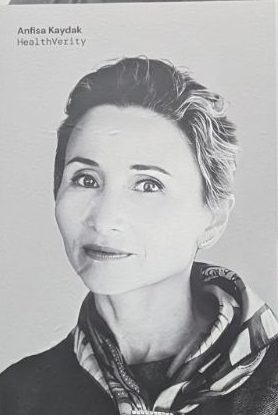
Anfisa's portrait on the speaker wall at Data + AI Summit 2023
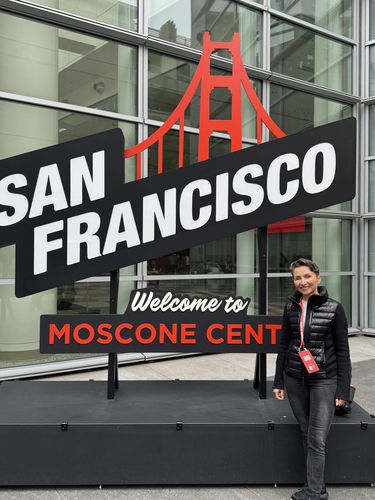
Anfisa at the Moscone Center in San Francisco

My portrait on the Data + AI Summit 2023 speaker wall, and at the Moscone Center in San Francisco.

06

About

I started my career in the early 2000s writing SQL against patient-level prescription data, and I've been making sense of healthcare data ever since. I went from analyst, to building syndicated data products, to leading platform architecture, and now to bringing AI into those platforms.

I've stayed hands-on by choice. The details of the data usually decide whether a strategy works in practice. What I enjoy most is turning fragmented, difficult data problems into platforms that teams can build on, and developing the people who make those platforms succeed.

Based in Greater Philadelphia Studied Applied Mathematics, State University, Minsk Languages English, Russian, Belarusian; Polish (reading)

Off the clock

I love being active and outdoors, whether that means hiking, skiing or a game of tennis. Mountains are my favorite place. Their scale and quiet power fascinate me, and I always come back from them calmer and with a clearer head. Art has been part of my life from the start, since both my parents are artists, and interior design is one of my great passions. Most of all, I love spending time with my family, on the slopes, on the trail, or travelling.

Anfisa hiking at a mountain summit
Anfisa skiing
Anfisa and her family on a ski lift bench
Anfisa and her family in zip line helmets above autumn hills
Anfisa and her daughter in Curaçao
Anfisa on the tennis court

Let's talk about your next data platform or AI initiative.

I'm open to senior data, platform and AI leadership roles.